E-mail Us


Can Whitening Reverse Tooth Damage or Just Brighten?

If you’ve ever looked in the mirror and wished your smile looked a little brighter—or a lot healthier—you’re not alone. Teeth whitening is one of the most requested cosmetic dental treatments today. But here’s the real question many patients at Young Dental Health Center in Upland ask:
Can whitening actually fix tooth damage, or does it just improve appearance?
Let’s clear up the confusion so you can make the best decision for your smile.
What Teeth Whitening Really Does
Teeth whitening is designed to remove stains and discoloration, not repair structural damage.
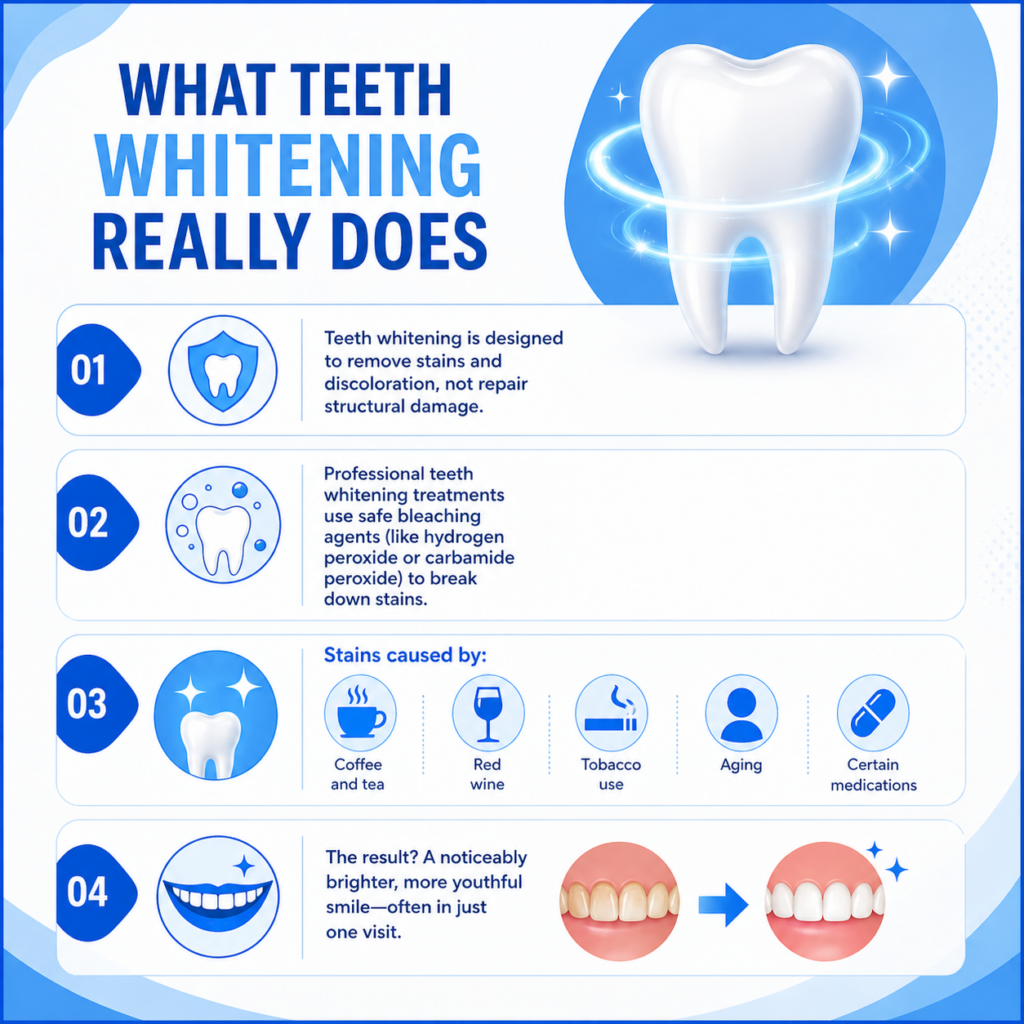
Professional teeth whitening treatments use safe bleaching agents (like hydrogen peroxide or carbamide peroxide) to break down stains caused by:
- Coffee and tea
- Red wine
- Tobacco use
- Aging
- Certain medications
The result? A noticeably brighter, more youthful smile—often in just one visit.
But here’s the key:
Whitening works on color, not structure.
Can Whitening Reverse Tooth Damage?
Short answer: No, whitening cannot reverse tooth damage.
Let’s break that down.
Whitening does NOT fix:
- Cavities or tooth decay
- Cracks or chips
- Enamel erosion
- Gum disease
- Infection or internal damage
If anything, whitening on damaged teeth can sometimes increase sensitivity or discomfort, especially if decay or exposed dentin is present.
Why?
Because whitening agents penetrate the enamel—but they don’t rebuild it.
So What Counts as Tooth Damage?
Tooth damage can take many forms, including:
- Surface wear from grinding (bruxism)
- Acid erosion from sodas or citrus-heavy diets
- Cracks or fractures from trauma
- Untreated cavities
- Discoloration from internal damage (like after injury)
Some of these issues may look like stains—but they require restorative treatment, not whitening.
Whitening vs. Treatment: How to Know What You Need
Here’s a quick guide to help you understand what your smile might need:
Whitening is ideal if you have:
- Yellow or stained teeth
- Even discoloration
- Healthy enamel and gums
You may need restorative care if you have:
- Dark spots that don’t lighten
- Tooth sensitivity or pain
- Visible cracks or rough edges
- White patches (possible enamel loss)
At Young Dental Health Center Upland, a quick dental exam can help determine the safest and most effective option for you.
The Risk of Skipping a Dental Check First
It might be tempting to grab a whitening kit and go—but here’s where things can go wrong:
- Whitening over cavities can cause sharp pain
- Damaged enamel may lead to increased sensitivity
- Uneven whitening can occur if restorations are present
That’s why dentists always recommend a pre-whitening exam.
Think of it this way:
Whitening is like polishing a surface—but if there’s damage underneath, it needs repair first.
What If You Have Both Damage and Stains?
Good news—you don’t have to choose one or the other.
A customized treatment plan may include:
- Fixing the damage first (fillings, bonding, crowns)
- Then whitening the surrounding teeth
- Matching restorations to your new shade
This ensures your smile looks natural, even, and healthy—not just bright.
Professional Whitening vs. DIY Kits
You’ve probably seen shelves full of whitening strips and gels—but they don’t always deliver the same results.
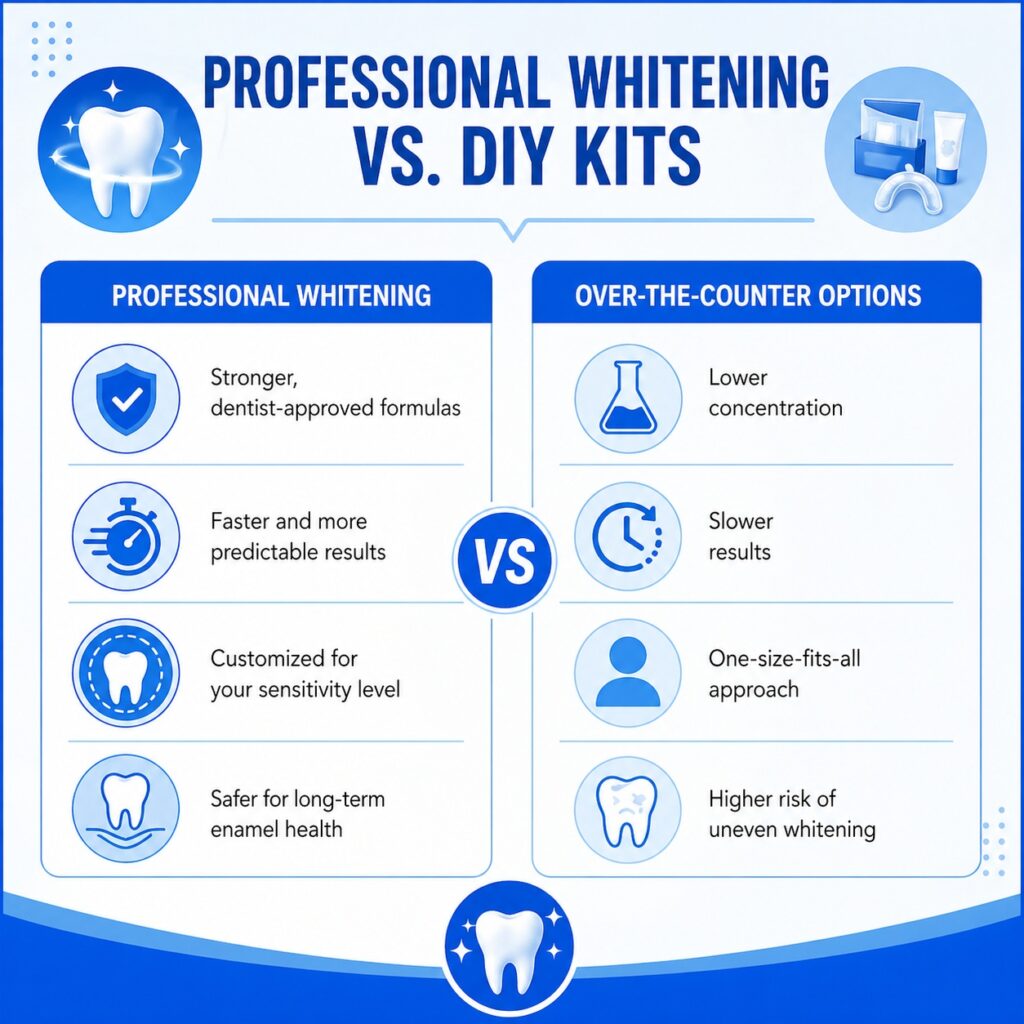
Professional Whitening:
- Stronger, dentist-approved formulas
- Faster and more predictable results
- Customized for your sensitivity level
- Safer for long-term enamel health
Over-the-Counter Options:
- Lower concentration
- Slower results
- One-size-fits-all approach
- Higher risk of uneven whitening
For patients in Upland looking for noticeable, safe results, professional care is usually the better investment.
A Local Touch: Your Smile in Upland
Upland residents often lead active, social lifestyles—whether it’s enjoying the local dining scene, outdoor trails, or family gatherings.
A brighter smile can make a real difference in:
- Job interviews and professional settings
- Social confidence
- First impressions
- Everyday interactions
At Young Dental Health Center, treatment plans are tailored to match not just your dental needs—but your lifestyle.
Quick Takeaways
- Teeth whitening brightens stains, not damage
- It cannot fix cavities, cracks, or enamel loss
- A dental check is essential before whitening
- Combining treatments can give the best results
- Professional whitening is safer and more effective
Ready for a Healthier, Brighter Smile?
If you’re wondering whether whitening is right for you—or if your teeth need more than just a brightness boost—the best next step is a professional evaluation.
At Young Dental Health Center in Upland, you’ll get honest guidance, personalized care, and results that look as good as they feel.
Book your appointment today and take the first step toward a confident, radiant smile.
Frequently Asked Questions
1. Can whitening make damaged teeth worse?
Yes, if there are untreated issues like cavities or cracks, whitening can increase sensitivity or discomfort.
2. Can I whiten my teeth after getting fillings or crowns?
Yes—but restorations won’t change color. Whitening is usually done before placing them.
3. How long do whitening results last?
Yes—but restorations won’t change color. Whitening is usually done before placing them.
4. Is professional whitening safe?
Absolutely—when done under dental supervision, it’s one of the safest cosmetic treatments available.