E-mail Us


Root Canal Recovery: What Not to Do

If you’ve just had a root canal, you’ve already taken a big step toward saving your natural tooth and relieving pain. But here’s the part many people underestimate: what you do after the procedure matters just as much as the treatment itself.
At Young Dental Health Center in Upland, we often see patients who could have healed faster (and more comfortably) with a few simple precautions. So let’s walk through what not to do after a root canal—along with practical tips to help you recover smoothly and get back to your routine.
Why Recovery Care Matters
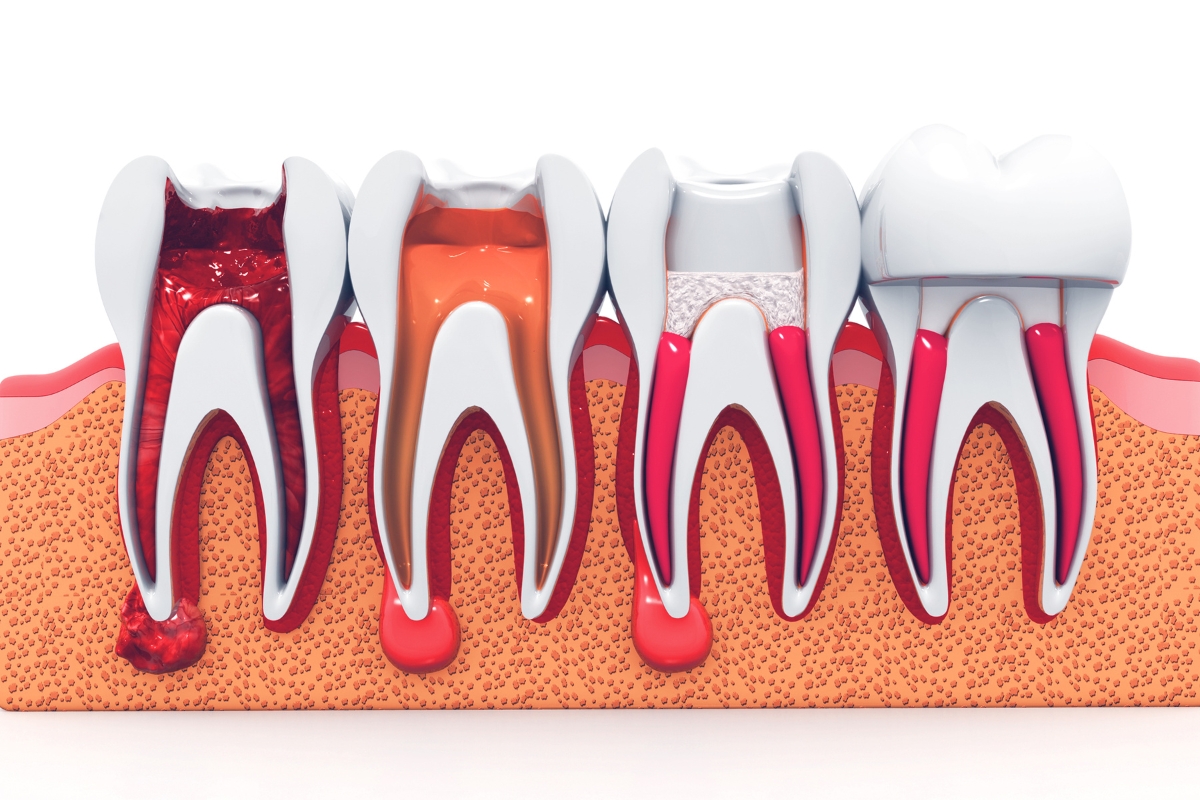
A root canal removes infection from inside your tooth, but the surrounding tissues still need time to heal. Ignoring aftercare can lead to:
- Increased sensitivity
- Delayed healing
- Temporary pain turning into complications
The good news? Most issues are completely avoidable.
What NOT to Do After a Root Canal
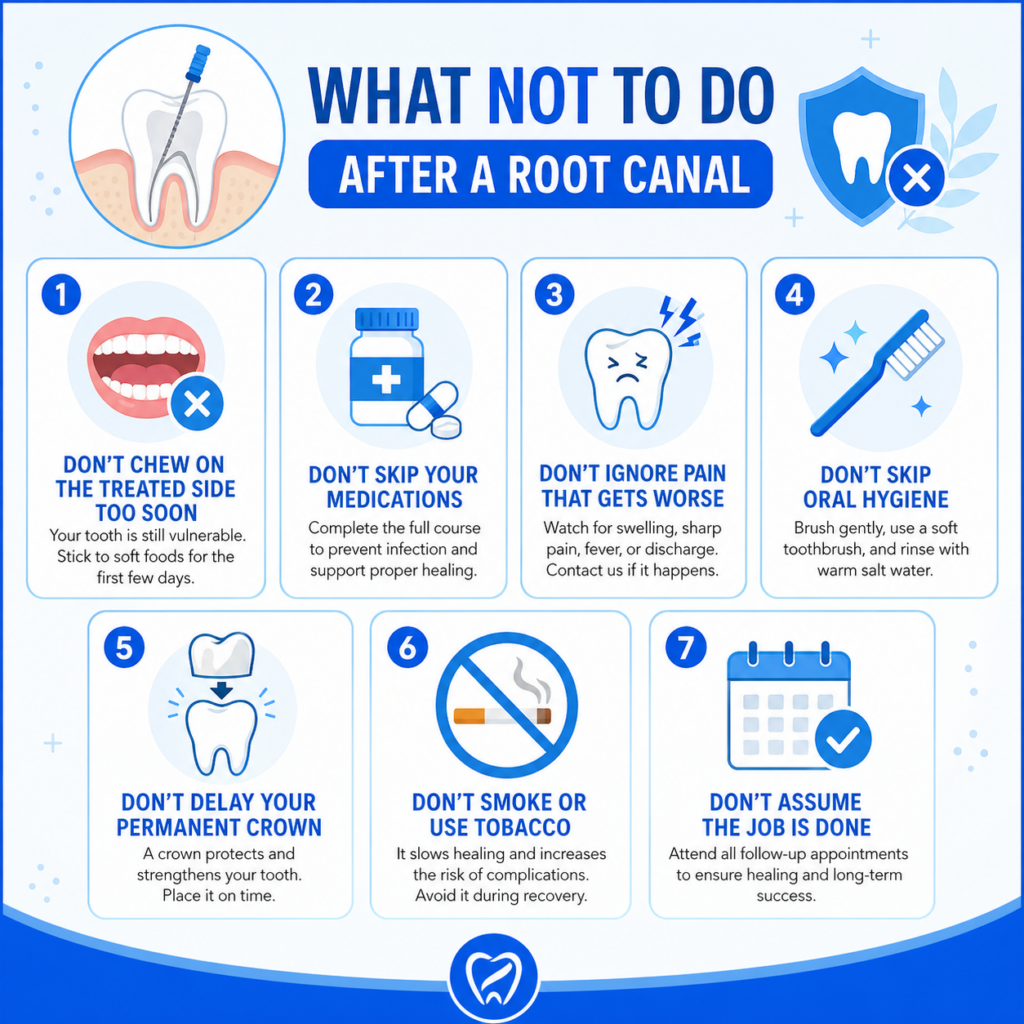
1. Don’t Chew on the Treated Side Too Soon
Your tooth may feel stable, but it’s still vulnerable—especially if a permanent crown hasn’t been placed yet.
Avoid:
- Crunchy snacks (chips, nuts)
- Hard foods (ice, candy)
- Chewing gum
Better choice: Stick to soft foods like mashed potatoes, yogurt, or smoothies for the first few days.
2. Don’t Skip Your Medications
If your dentist prescribed antibiotics or pain relievers, they’re not optional.
Stopping medication early can:
- Allow bacteria to return
- Increase inflammation
- Slow down healing
Even if you feel better, complete the full course as instructed.
3. Don’t Ignore Pain That Gets Worse
Mild discomfort is normal. But pain that increases after a few days isn’t something to brush off.
Watch for:
- Swelling that doesn’t go down
- Sharp or throbbing pain
- Fever or unusual discharge
If you notice these symptoms, contact us right away.
4. Don’t Skip Oral Hygiene
It’s tempting to avoid brushing near the treated area—but that can do more harm than good.
What to do instead:
- Brush gently around the area
- Use a soft-bristled toothbrush
- Rinse with warm salt water
Keeping the area clean prevents new infections.
5. Don’t Delay Your Permanent Crown
A root canal-treated tooth is more fragile than a natural one. Without a crown, it can crack or break.
Common mistake: Waiting too long because the tooth feels fine.
In reality, placing the crown promptly:
- Restores strength
- Protects the tooth long-term
- Prevents costly future repairs
6. Don’t Smoke or Use Tobacco
Smoking slows healing and increases the risk of complications.
In a city like Upland, where active lifestyles and outdoor living are common, protecting your oral health helps you stay at your best.
Even a short break from smoking during recovery can make a big difference.
7. Don’t Assume the Job Is Done
A root canal is a major step—but it’s part of a larger treatment plan.
Skipping follow-ups can mean:
- Missed signs of reinfection
- Delayed crown placement
- Long-term issues going unnoticed
Stay committed to your appointments—it’s the easiest way to protect your investment.
What You SHOULD Do Instead
Let’s flip the script. Here’s how to support a smooth recovery:
- Eat soft, nourishing foods
- Stay hydrated (especially important during warm days)
- Rest and avoid heavy physical strain for 24–48 hours
- Take medications exactly as prescribed
- Attend all follow-up visits
When to Call Your Dentist
Don’t wait if you notice:
- Severe or worsening pain
- Swelling after 2–3 days
- Bite feels uneven
- Temporary filling falls out
Prompt care can prevent bigger problems.
Ready for a Smooth, Stress-Free Recovery?
A root canal doesn’t have to be intimidating—and recovery doesn’t have to be uncomfortable. With the right care (and by avoiding a few common mistakes), you can heal quickly and get back to enjoying life in Upland.
If you have questions, concerns, or need your follow-up appointment, the team at Young Dental Health Center is here to help.
Don’t wait—schedule your visit today and keep your smile strong, healthy, and pain-free.
Frequently Asked Questions (FAQs)
1. How long does root canal recovery take?
Most patients feel normal within a few days, but full healing can take 1–2 weeks depending on the case.
2. Is it normal to feel sensitivity after a root canal?
Yes, mild sensitivity is common, especially when chewing. It should gradually improve.
3. What happens if I don’t get a crown?
Without a crown, the treated tooth is more likely to crack or break, which could require extraction later.
4. Can the infection come back?
It’s rare, but possible—especially if aftercare isn’t followed or the crown is delayed.
5. What should I eat after a root canal?
Stick to soft foods like Soups, Scrambled eggs, Smoothies, Rice and pasta. Avoid hard or sticky foods for a few days.